

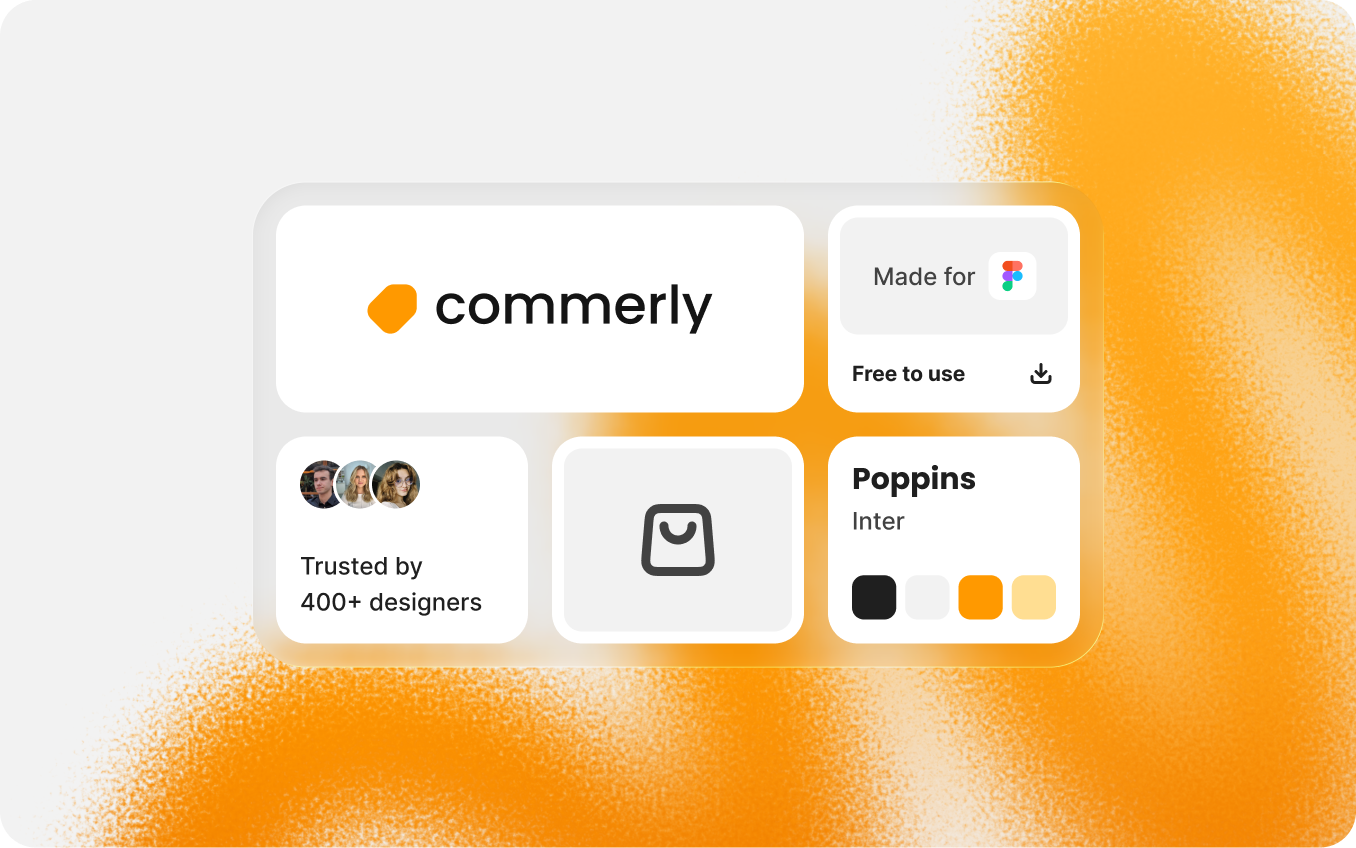
Commerly is a design system focused specifically for eCommerce projects.
When I was working on on a different eCommerce products, it always was some challenge, or a problem. So in a process of fixing it, I have began to collect and structurize it. This pack of fixes now called Commerly, and it evolves very update.
For now, Commerly is still in an early stage of development. But I’m working to make it a practical, comfy and flexible design system that actually fits eCommerce projects.
So, in this article, I'm about to explain why Commerly exists, what I’m trying to build, what kind of users it targets, and what it doesn’t try to be.
The problem I faced
For a long time, while I was working on eCommerce-related projects, I couldn’t find a design system that truly fit my needs. No matter the product: an online store, a marketplace, or something alike.
While I was exploring popular or small design systems, I was impressed and inspired by some of their interesting technical decisions and cool looking visuals.
But if you zoom out, it’s just not going to work with e-commerce projects. For me, it always felt like some kind of trade-offs and never like complete solution. To use this systems I either had to adjust my product for it, or spend a lot of time adapting the system so that it at least somehow met my needs.
So most of the time I relied on my own “fragments” that I carried from project to project. Some color palettes, components, layout rules, patterns, etc. Over time, those fragments started to look like a system — not because I planned it, but because there wasn’t any reliable alternative.
And I realised that only while working with my last marketplace project. This “system” I had — was constantly evolving, just to keep up with a scope of work and ideas.
Eventually, that marketplace was never released. But at that point, I quit feeling like it’s some “personal limitation” — and started looking as an actual lack of a system for e-commerce projects.
Current status
With Commerly design system I’m trying to evolve this fragments into something structured and usable — a solid foundation for eCommerce projects.
Most “universal” design systems treat eCommerce needs as secondary. With Commerly, I want eCommerce to be a main priority.
For now, it doesn’t look like eCommerce focused system, but as a framework or working base, and it’s a lot of work ahead to fix that. Now it includes a “Foundation” section (this is my main focus for now) and a set of core components that I plan to expand in a future.
Yet I still need to rework a lot from it, but I don’t want to hide the unfinished parts. That’s why I use “status” above every element. I’d prefer to be clear what’s stable, what’s changing, what will likely be removed or rebuilt.
My goal isn’t to present a perfect “snapshot” in every update, but to make the changes in design system predictable.
Who is this made for
Commerly is built for designers, who work with eCommerce projects that doesn’t have it’s own design system behind it.
That usually means — solo designers, small studios, or product teams, who matters speed, ease in understanding, and adaptability.
It’s especially useful when you don’t have much time (or budget) to design a system from scratch for every new project. Or when a strict rules, complexity and level of detail in the design system, slows down the project.
At the same time, Commerly is not designed for:
- large organizations that need a fully coded, enterprise-ready system,
- teams looking for a ready-made store/website builder,
- designers who expect the system to work perfectly from start, without any adaptation.
Of course, everyone can use Commerly right now, but that means accepting a few things: some parts are incomplete, some decisions will change, and you’ll need to adapt it to fit your product.
Why I develop it this way
I’m developing Commerly as a constantly evolving system. I’m not trying to make everything upfront as a “perfect” system.
Releasing as early versions of design system, makes more sense for me and helps with feedback. So I can discuss changes and my decisions with users in Discord.
This way I can keep updates smaller and stable over time. And it will not turn into something heavy and hard to work with.
So design system will improve from users needs and feedback — not just from my assumptions or willing. And I’ll work to make Commerly useful in your’s eCommerce project.
#project
·
19 Apr 2026
Support on Patreon
Support freely. Cancel anytime.
Starts from €3/month
Become a Patron
Commerly is a design system focused specifically for eCommerce projects.
When I was working on on a different eCommerce products, it always was some challenge, or a problem. So in a process of fixing it, I have began to collect and structurize it. This pack of fixes now called Commerly, and it evolves very update.
For now, Commerly is still in an early stage of development. But I’m working to make it a practical, comfy and flexible design system that actually fits eCommerce projects.
So, in this article, I'm about to explain why Commerly exists, what I’m trying to build, what kind of users it targets, and what it doesn’t try to be.
The problem I faced
For a long time, while I was working on eCommerce-related projects, I couldn’t find a design system that truly fit my needs. No matter the product: an online store, a marketplace, or something alike.
While I was exploring popular or small design systems, I was impressed and inspired by some of their interesting technical decisions and cool looking visuals.
But if you zoom out, it’s just not going to work with e-commerce projects. For me, it always felt like some kind of trade-offs and never like complete solution. To use this systems I either had to adjust my product for it, or spend a lot of time adapting the system so that it at least somehow met my needs.
So most of the time I relied on my own “fragments” that I carried from project to project. Some color palettes, components, layout rules, patterns, etc. Over time, those fragments started to look like a system — not because I planned it, but because there wasn’t any reliable alternative.
And I realised that only while working with my last marketplace project. This “system” I had — was constantly evolving, just to keep up with a scope of work and ideas.
Eventually, that marketplace was never released. But at that point, I quit feeling like it’s some “personal limitation” — and started looking as an actual lack of a system for e-commerce projects.
Current status
With Commerly design system I’m trying to evolve this fragments into something structured and usable — a solid foundation for eCommerce projects.
Most “universal” design systems treat eCommerce needs as secondary. With Commerly, I want eCommerce to be a main priority.
For now, it doesn’t look like eCommerce focused system, but as a framework or working base, and it’s a lot of work ahead to fix that. Now it includes a “Foundation” section (this is my main focus for now) and a set of core components that I plan to expand in a future.
Yet I still need to rework a lot from it, but I don’t want to hide the unfinished parts. That’s why I use “status” above every element. I’d prefer to be clear what’s stable, what’s changing, what will likely be removed or rebuilt.
My goal isn’t to present a perfect “snapshot” in every update, but to make the changes in design system predictable.
Who is this made for
Commerly is built for designers, who work with eCommerce projects that doesn’t have it’s own design system behind it.
That usually means — solo designers, small studios, or product teams, who matters speed, ease in understanding, and adaptability.
It’s especially useful when you don’t have much time (or budget) to design a system from scratch for every new project. Or when a strict rules, complexity and level of detail in the design system, slows down the project.
At the same time, Commerly is not designed for:
- large organizations that need a fully coded, enterprise-ready system,
- teams looking for a ready-made store/website builder,
- designers who expect the system to work perfectly from start, without any adaptation.
Of course, everyone can use Commerly right now, but that means accepting a few things: some parts are incomplete, some decisions will change, and you’ll need to adapt it to fit your product.
Why I develop it this way
I’m developing Commerly as a constantly evolving system. I’m not trying to make everything upfront as a “perfect” system.
Releasing as early versions of design system, makes more sense for me and helps with feedback. So I can discuss changes and my decisions with users in Discord.
This way I can keep updates smaller and stable over time. And it will not turn into something heavy and hard to work with.
So design system will improve from users needs and feedback — not just from my assumptions or willing. And I’ll work to make Commerly useful in your’s eCommerce project.
#project
·
19 Apr 2026
Support on Patreon
Support freely. Cancel anytime.
Starts from €3/month
Become a Patron